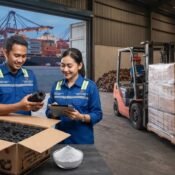
Partnering with a Reliable Coconut Charcoal Exporter B2B
The Ultimate B2B Procurement Guide: Partnering with a Reliable Coconut Charcoal Exporter B2B
The global energy, culinary, and recreational fuel sectors are currently experiencing a historic, permanent paradigm shift. Across North America, Europe, the Middle East, and East Asia, commercial importers, wholesale distributors, and hospitality chains are actively moving away from chemically laced quick-light coals and environmentally destructive wood lump charcoal. In their place, a sustainable, high-performance standard has captured the global marketplace: the one hundred percent natural coconut shell briquette.
For international businesses, securing a reliable, high-volume supply chain for this heavily demanded commodity is a critical strategic imperative. Choosing to partner directly with a reliable coconut charcoal exporter b2b is the single most effective way for commercial buyers to eliminate middleman markups, guarantee strict chemical consistency, and secure long-term brand credibility. This comprehensive, expert-led guide examines the rigorous technical benchmarks, the undeniable geographic advantages of Southeast Asia, and the logistical essentials required to dominate the international charcoal trade through a direct factory partnership.
The Surging Global Demand for Sustainable Biomass Fuel
To fully comprehend the massive economic value of premium coconut charcoal, industry professionals must first analyze the shifting global regulatory and consumer landscape. Traditional wood charcoal is facing severe international backlash due to its direct contribution to global deforestation, habitat destruction, and excessive carbon emissions during primitive production methods. Furthermore, standard wood lump charcoal frequently suffers from highly inconsistent sizing, unpredictable burn times, and excessively high ash production, all of which deeply frustrate commercial end-users who rely on steady, reliable heat.
The rapid growth of the global coconut charcoal market is driven primarily by two distinct but equally demanding sectors: the expanding international shisha and hookah industry, and the high-end culinary and commercial barbecue sector. Both of these markets demand a level of purity, consistency, and thermal stability that traditional wood charcoal simply cannot provide.
In the highly lucrative recreational shisha market, the purity of the heat source dictates the entire user experience. If a charcoal briquette emits even the slightest trace of smoke, sparks dangerously upon ignition, or releases synthetic chemical odors, it immediately compromises and ruins the carefully curated flavor profile of the premium shisha tobacco. Hookah enthusiasts, luxury lounge operators, and retail consumers demand an odorless, tasteless, and completely smokeless fuel that delivers steady, radiant heat for hours.
Similarly, in the professional culinary and barbecue sectors, executive chefs, commercial pitmasters, and high-volume Korean barbecue establishments require intense, consistent thermal energy. This heat must radiate evenly and last for several hours without ever imparting toxic chemical residues, heavy smoke flavors, or synthetic accelerant tastes into premium cuts of meat and delicate seafood. Coconut shell briquettes fulfill these incredibly rigorous requirements through a zero-deforestation, purely circular economy model. Because the charcoal is produced exclusively from the discarded shells of harvested coconuts—a massively abundant agricultural byproduct that would otherwise be left to rot or burned as waste—not a single tree is cut down during production.
The Geographic Edge: Why the Indonesian Archipelago Dominates
When discussing charcoal production on a global scale, Indonesia stands completely unmatched. The archipelago’s dominance is not accidental or temporary; it is the direct result of a perfect storm of equatorial geography, unparalleled agricultural scale, rich volcanic soil, and deep generational manufacturing expertise.
As the world’s largest producer of coconuts, Indonesia boasts a continuous, year-round harvest across major agricultural island groups such as Sumatra, Sulawesi, Java, and Maluku. This massive, unending agricultural output guarantees an uninterrupted supply of raw coconut shells for local manufacturing facilities, completely shielding international importers from the seasonal supply shortages and price fluctuations that frequently paralyze other agricultural fuel sectors globally.
Furthermore, the coconuts grown in Indonesia’s mineral-rich, volcanic soil are scientifically renowned for producing exceptionally thick and dense shells. When these high-density shells are properly carbonized through controlled pyrolysis, they yield a significantly higher fixed carbon percentage compared to shells harvested in non-volcanic or subtropical zones around the world. Higher fixed carbon is the ultimate foundational metric of charcoal quality, dictating both the heat output and the longevity of the burn.
Beyond the sheer abundance of superior raw materials, Indonesia possesses a deeply ingrained culture of artisanal charcoal manufacturing. The local workforce has spent decades perfecting the complex science of carbonization. Local producers possess deep operational knowledge regarding oxygen-restricted kilns, ensuring the raw material is systematically converted into pure char without burning away essential carbon assets into worthless ash. Coupled with a highly developed maritime export infrastructure featuring major deep-water port facilities in Jakarta, Semarang, and Surabaya, Indonesia is geographically, agriculturally, and economically engineered to supply the entire globe with premium fuel.
Defining True Export Quality Through Technical Specifications
In the competitive wholesale B2B trade, product quality must be strictly verified through independent laboratory testing and chemical analysis rather than vague promotional claims. When global buyers evaluate a reliable coconut charcoal exporter b2b, they must thoroughly evaluate the critical chemical and physical metrics that define true export-grade quality. An elite manufacturer will always operate with complete transparency regarding these specifications.
The most critical indicator of exceptional quality is the fixed carbon content. This precise metric represents the pure, combustible solid left behind after moisture and volatile gases have been systematically driven off during the carbonization process. A top-tier manufacturer will guarantee a fixed carbon content exceeding eighty percent for standard commercial grades, while elite shisha grades will consistently push up to eighty-five percent or higher. This immense carbon density guarantees a remarkably hot and long-lasting burn, often exceeding two to two-and-a-half hours for compact shisha cubes and up to four hours for thick culinary briquettes.
Equally important to the carbon density is the precise measurement of ash content and the visual observation of its resulting color. High ash is a severe detriment, particularly in hookah applications, as the excess mineral residue coats the briquette, suffocates the thermal heat output, and clogs the smoking equipment. Premium export briquettes are strictly engineered to leave behind less than two and a half percent ash for shisha use, and under five percent for heavy commercial culinary use. Furthermore, the resulting ash must burn to a pure white or a very light silver-grey color. If the ash burns brown, yellow, or dark grey, it is a definitive and undeniable indicator that the manufacturer has utilized inferior raw materials, included dirt, or illicitly mixed in cheap wood sawdust to cut their production costs.
Strict international export standards also dictate that internal moisture levels must be maintained strictly below five percent. Excess moisture makes the charcoal incredibly difficult to ignite and can cause dangerous sparking, popping, or violent cracking under intense heat as the trapped water rapidly turns to steam. Volatile matter must also be carefully controlled and kept below fifteen percent to ensure the burn remains completely smokeless and odorless from the very moment of ignition until the briquette turns completely to ash. Finally, the briquettes must be structurally dense enough to survive rigorous drop tests, withstanding a one-meter drop onto solid concrete without shattering, ensuring they remain perfectly intact during rough transoceanic shipping and container handling.
The Engineering Mastery of the Manufacturing Process at Bornis Factory
Producing world-class charcoal briquettes requires a highly scientific approach to processing biomass. Established exporters like Bornis Factory follow a rigorous, multi-stage manufacturing workflow that demands precision at every single interval.
The process begins with meticulous raw material sourcing and sorting, where fully mature, completely sun-dried coconut shells are collected from trusted agricultural partners. Young or wet shells are immediately rejected at the facility gates to maintain maximum carbon density. The selected shells undergo controlled carbonization in oxygen-restricted kilns, a process known as pyrolysis. This drives off internal moisture and volatile compounds while preserving the pure, highly combustible carbon core.
Once carbonized, the raw char is fed into heavy-duty industrial pulverizers and crushed into an ultra-fine, micro-scale powder. A finer carbon mesh size directly yields a smoother, denser, and aesthetically flawless final briquette. To effectively bind this fine carbon powder together, Bornis Factory exclusively blends the material with a one hundred percent natural, food-grade tapioca starch binder and highly purified water. Absolutely no chemical accelerants, sodium nitrate, or synthetic artificial additives are ever introduced into the proprietary mixture.
The damp organic mixture is then fed into immense hydraulic presses and extruded under extreme pressure into specific market-requested shapes, including precision cubes, finger logs, or hexagonal briquettes. Finally, the freshly molded briquettes are baked in temperature-controlled industrial ovens for up to seventy-two hours, systematically reducing the internal moisture below the strict five percent export threshold.
Navigating Maritime Regulations and Global Freight Logistics
For wholesale B2B buyers, engineering the perfect product is only half the battle; safely, legally, and efficiently transporting it across the globe is the other vital component. Shipping compressed carbon across international borders requires strict compliance with maritime transport laws. Charcoal is classified under the International Maritime Dangerous Goods Code as a Class 4.2 hazardous material, meaning it is considered a spontaneously combustible solid if not properly treated, dried, and packaged.
To ensure smooth customs clearance and absolutely avoid container rejections or delays at major international ports, a premier exporter provides a complete, flawless compliance documentation package for every single shipment. This includes a comprehensive Material Safety Data Sheet outlining technical safety data and handling protocols. Furthermore, they secure vital Self-Heating Test certificates issued by accredited independent testing bodies, certifying that the briquettes have undergone rigorous oven heating tests and are entirely safe for prolonged container shipping. Official Certificates of Origin are also provided, verifying the Indonesian origin of the cargo and allowing global importers to access applicable international trade tariff preferences.
Logistical efficiency also depends heavily on master container space optimization. Highly experienced exporters strategically plan their freight loads, utilizing advanced floor-loading or palletization techniques to fit roughly eighteen metric tons into a standard twenty-foot container, or up to twenty-six metric tons into a forty-foot High Cube container. Maximizing this cargo space minimizes the landed freight costs per kilogram for the buyer, directly widening their downstream retail profit margins.
Partnering with Bornis Factory for Unmatched B2B Success
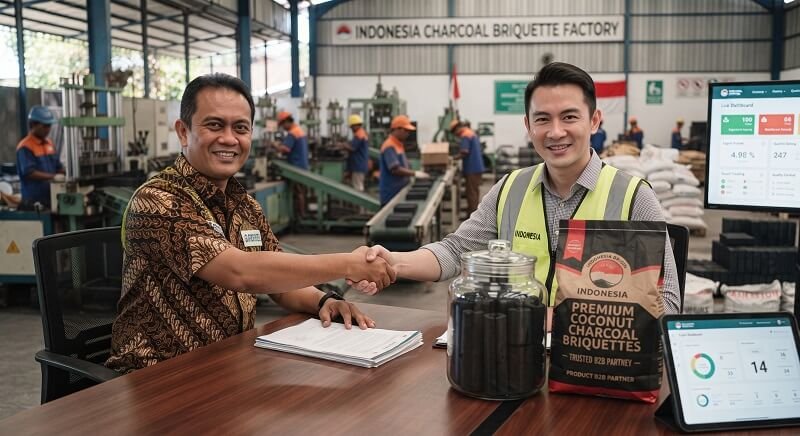
In an industry heavily saturated with inconsistent third-party brokers and unverified trading companies, finding a true manufacturing partner is the ultimate key to scaling your enterprise securely. Importers require a facility that offers total vertical transparency, rigorous multi-stage quality control, and the massive production capacity required to meet consistently growing global demands without ever compromising on chemical specifications.
This is exactly where Bornis Factory distinguishes itself entirely from the competition. Positioned centrally within Indonesia’s rich charcoal production landscape, they have built a formidable, internationally recognized reputation based on uncompromising product quality and unwavering delivery reliability. Recognized widely as a reliable coconut charcoal exporter b2b, Bornis Factory offers the exact combination of technical manufacturing expertise and logistical prowess needed for long-term global success.
Understanding that brand identity is absolutely paramount in the modern B2B retail landscape, Bornis Factory offers extensive Original Equipment Manufacturer packaging services. Global buyers are granted the creative freedom to fully customize their entire packaging suite, from highly durable, moisture-resistant inner plastic liners and custom-printed retail boxes to heavy-duty master corrugated cartons designed for maximum shelf appeal and freight protection.
By turning your procurement focus directly to Indonesia and forging a strategic, long-term partnership with Bornis Factory, you eliminate middleman markups, guarantee strict product consistency, and secure a massive competitive advantage in your local territory. Elevate your global supply chain, empower your brand’s international reputation, and fuel your future business growth by investing in the world’s finest sustainable energy solution today.
#ReliableCoconutCharcoalExporterB2B #CoconutCharcoal #BornisFactory #ShishaCharcoal #BBQCharcoal #CharcoalManufacturer #WholesaleCharcoal #EcoFriendlyFuel

All Categories
Recent Posts

Natural Coconut Charcoal Briquettes for Outdoor Backyard BBQ Grilling
Sourcing Top Coconut Shell Charcoal Briquettes for Professional Shisha and BBQ Restaurants